A Professional Review of 3D Cactus Floral Embroidery Patterns
First Impression: A Blend of Rustic Charm and Modern Craft
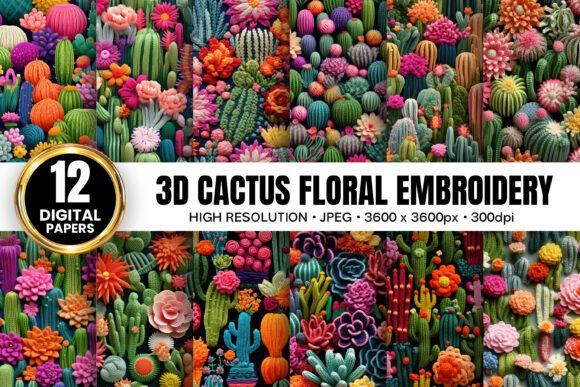
Looking at the title 3D Cactus Floral Embroidery Patterns, my immediate thought is versatility. This set promises a fusion of desert resilience and floral softness, which translates into a design personality that’s both rustic and playful. For a small business, this is a goldmine. It feels friendly, handmade, and premium enough to elevate a brand without being overly formal. Whether you're a cozy café, a boutique florist, or a creative pet brand, these patterns offer a visual anchor that's easy to connect with.
Real-World Business Applications for Merchandise and Branding
As an embroidery designer, I always evaluate a pattern through the lens of practical application. Here’s where 3D Cactus Floral Embroidery Patterns truly shines for small business merch.
Embroidered Patches for Uniforms and Branded Gear
A key application is the embroidered patch. These high-resolution digital papers can be adapted into a stunning chest logo or sleeve detail for staff uniforms. For a local bakery or craft studio, a custom patch on an apron instantly boosts professionalism. The “3D” aspect suggests texture, which, when translated into stitches, creates a tactile, high-value look on items like tote bags or work shirts.
Cap Embroidery and Small-Scale Accents
The floral and cactus motifs are ideal for cap embroidery, especially if the elements are balanced. A single cactus bloom on a cap front can be a subtle yet recognizable brand mark. Similarly, these graphics can be minimized for product packaging accents or as a small label on handmade goods, adding a consistent touch without overwhelming the product.
Tote Bags, Event Merch, and Customer Gifts
For merchandise like tote bags or event giveaway items, these patterns offer seamless design potential. A larger, bold rendition across a tote bag makes a statement. The 3600x3600 pixel resolution ensures crisp detail for printable mockups and eventual commercial embroidery, helping Etsy sellers and merch creators present a polished finished product.
Technical Considerations for Production Success
The product description specifies high-resolution JPG files, which are excellent starting points for creating a digital embroidery file. However, successful translation into stitches requires careful planning.
Testing for Scale and Fabric Compatibility
Always test the design in black and white first to assess its core structure. Check how it works at a small patch size—fine floral details might need simplification to avoid high stitch density on curved surfaces like caps. Review thread color contrast, especially if applying the design to dark uniforms; the cactus greens and floral hues need to pop.
The Importance of Stabilizer and Hoop Size
Fabric texture is crucial. For sturdy items like aprons or tote bags, a proper stabilizer is non-negotiable to maintain pattern integrity. Before production, confirm the hoop size needed for your specific machine embroidery design. It’s advisable to test on real fabric scraps that match your final product, particularly for textured fabrics.
Client Presentation and Licensing
Use the high-resolution files to create a detailed mockup for client approval. Compare the 3D Cactus Floral Embroidery Patterns beside your other brand assets to ensure visual consistency. Crucially, as these are graphics, confirm the commercial licensing terms for the patterns before any business use to ensure you’re covered for commercial embroidery projects.
Impact on Brand Identity and Customer Perception
Implementing this design across your merchandise isn’t just decoration; it’s brand building.
Building Trust and Recognition
A consistent, well-executed embroidered patch on uniforms fosters customer trust and recognition. It signals a settled, professional business. The handmade presentation inherent in embroidery, paired with these organic patterns, enhances product value for a boutique or handmade shop, directly increasing buyer engagement.
Elevating Visual Consistency
Using the same pattern family across caps, aprons, and product labels creates a powerful visual consistency. This makes your brand memorable. Whether it’s a small café’s staff attire or a pet brand’s customer gifts, the 3D Cactus Floral Embroidery Patterns become synonymous with your brand’s personality—rustic, creative, and carefully crafted.
Final Designer Notes for a Smooth Project
To wrap up this review, here are my condensed, practical steps for using these patterns successfully in your business.
- Start with a simple black-and-white vector test to gauge detail clarity.
- Check spacing between elements if you plan a condensed patch design.
- Always inspect the design at the actual size it will be embroidered, especially for small applications.
- Select thread colors that complement your brand palette and the base fabric color.
- Use appropriate stabilizer for the fabric type (heavy for bags, lighter for apparel).
- Create a physical or digital mockup using the provided JPGs before committing to stitch.
- Verify all technical details like final stitch count and file format conversion with your embroidery software or service provider.
- Ensure your use aligns with the product’s license for your specific commercial embroidery needs.
In conclusion, the 3D Cactus Floral Embroidery Patterns offer a robust foundation for elevating your small business merchandise. Their aesthetic is broadly appealing, and their technical potential is strong, provided you approach the embroidery process with the meticulous care that defines professional custom apparel. By integrating these design assets thoughtfully, you can create branded pieces that look great, wear well, and tell your brand’s story stitch by stitch.