Tree of Life Modern Cross Stitch Pattern: A Craft Fair Review
As an embroidery designer preparing for a weekend market, every pattern I select is a calculated investment. It's not just about beauty; it's about what sells, what looks good on a crowded table, and what I can realistically produce. Today, I'm reviewing the Tree of Life Modern Cross Stitch Pattern, a full-coverage design for advanced stitchers, to see if it’s worthy of my craft fair booth.
First Impressions: Modern Elegance for a Premium Booth
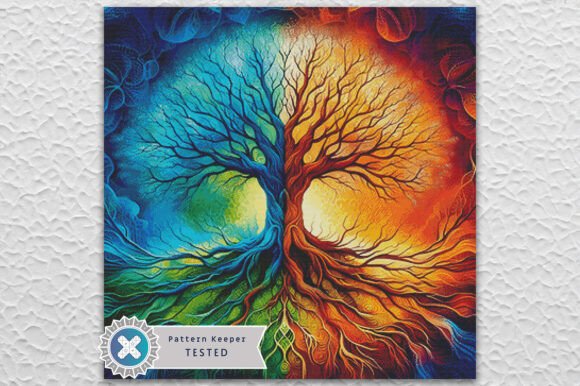
The title "Tree of Life Modern Cross Stitch Pattern" immediately sets a tone. This isn't a rustic, farmhouse-style tree. The descriptor "modern" suggests clean lines, a thoughtful composition, and an elegant feel. With 75 DMC colors, this is a complex, full-coverage piece, signaling depth and premium craftsmanship. My first thought is that this pattern leans decorative and sophisticated, perfect for customers looking for a statement piece rather than a cute accent. In a booth surrounded by simpler designs, this could stand out as a high-value, showstopper item.
Where This Pattern Stands Out on the Product Table
My table display typically includes tote bags, aprons, tea towels, caps, patches, pouches, and pillow covers. The key is matching the design's scale and mood to the right product.
For the Tree of Life Modern Cross Stitch Pattern, the finished size—approximately 25 inches square on 14-count fabric—makes it a large focal design. This isn't a tiny patch for a cap. Its grandeur demands a canvas that can support it.
Top Product Candidates
- Pillow Covers: This is the ideal application. A large, decorative pillow with this intricate design becomes a luxury home decor item. It photographs beautifully for Etsy listings and commands a higher price point.
- Tote Bags & Market Bags: A full-coverage tree on the front panel of a sturdy tote bag creates a stunning, functional art piece. It elevates a simple bag into a handmade product with serious visual appeal.
- Wall Hangings/Framed Hoop Art: As a pure display piece, this would be the centerpiece of my booth, drawing immediate customer attention and showcasing my skill.
- Aprons: On a chef-style apron, this design would be ambitious but stunning. It would need to be positioned carefully to avoid dense stitch areas over seams.
Products to Approach Carefully
- Tea Towels & Textured Towels: The high stitch count and tiny details might lose clarity on a textured linen or terrycloth surface. Thread contrast on darker towel fabrics would need rigorous testing.
- Caps & Curved Surfaces: The scale is simply too large. Attempting to shrink it would destroy the intricacy.
- Small Pouches & Patches: Again, scale is the enemy. This pattern is not meant to be an accent; it's the main event.
Practical Production & Selling Points
Turning this digital embroidery file into physical craft fair products requires a practical lens.
Visual Clarity and Customer Engagement
At a glance, from a few feet away in a bustling market, a "Tree of Life" motif is universally understood and attractive. It draws people in. Once close, the modern interpretation and the sheer detail (75 colors!) invite lingering observation, sparking conversation about the handmade process. This engagement is gold for sales.
Photography & Online Listings
For my Etsy seller side, this pattern, executed well, creates a phenomenal product photo. The color gradient and complexity look professional and high-quality, boosting perceived value. I would absolutely create printable mockups of this design on pillows and tote bags for my digital listings to preview the appeal.
Batch Production Reality
This is not a quick, repeatable design for batch production. Each item would be a significant time investment. Therefore, I'd likely create only one or two finished pieces as premium offerings for my booth, using them as samples to drive orders for custom work or to sell the pattern itself as a digital embroidery file to other crafters.
Careful-Use Notes from the Hoop
Before stitching anything for sale, a professional runs tests. Here’s my checklist for this specific pattern.
- Stitch Density & Fabric Choice: Full coverage on 14-count fabric means a very dense, potentially stiff finished area. For a pillow, this is fine. For a tote bag meant to be flexible, I’d test on scrap fabric first and consider a slightly lower-count fabric for more drape.
- Hoop Size & Stabilizer: Ensuring I have a hoop large enough to accommodate the entire design area is critical. For machine embroidery applications (if adapted), the right stabilizer for the base fabric is non-negotiable to prevent puckering.
- Thread Contrast & Color Testing: With 75 colors, subtle gradients are likely. Stitching a small sample section on both light and dark versions of my intended product fabric is essential to ensure the design retains its depth and clarity.
- Commercial Licensing: The product description mentions it’s a pattern for advanced stitchers. Before selling any finished products, I must confirm the license terms explicitly allows for commercial embroidery and sale of handmade items. This is a fundamental step.
Final Judgment: Booth-Worthy with Strategic Placement
The Tree of Life Modern Cross Stitch Pattern is a strong candidate for elevating my brand and booth presence. It offers a modern, elegant aesthetic that aligns with premium home decor and fashion accessories. Its large scale makes it impractical for small items, but perfect for statement pieces.
My strategy would be to create one impeccable finished pillow cover as my central display sample. Its visual appeal would attract customers, demonstrate high-end handmade quality, and serve as a tangible example of what the pattern can achieve. I would also have the pattern available for sale as a digital download for other makers.
For production, I advise all fellow boutique makers and creative entrepreneurs: create at least one real mockup. Test it on your intended fabric. Check the finished dimensions against your actual product dimensions (like a tote bag panel). Confirm every detail from the provided specifications—the stitch count, the finished dimensions on different fabric counts—before committing your time and materials. This pattern has the potential to be a best-selling design asset for your small shop, but only if executed with thoughtful precision.