Purple Witch: A Designer's Review for Your Next Project
When a new embroidery pattern lands in my digital library, I don’t just look at the picture. I look at its bones. I consider how it will translate from pixels to thread, from a screen to a tangible piece in someone’s hands. Today, I’m thinking through the Purple Witch Cross Stitch Pattern PDF, a design I’ve been examining for potential use in my own client projects and small shop merchandise.
The Immediate Mood & Visual Personality
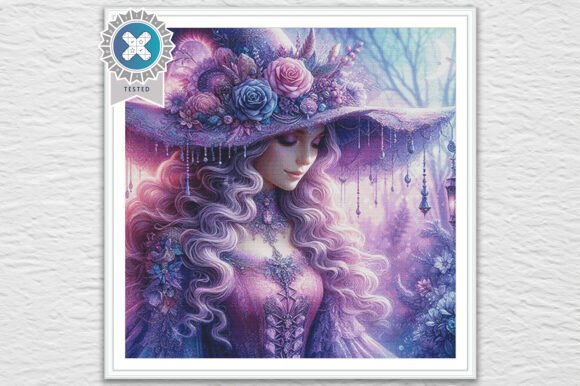
First impressions are everything, both for a crafter’s motivation and a customer’s instant engagement. The Purple Witch theme conjures a specific, delightful mood—it’s mystical, playful, and slightly nostalgic, not grim or overly spooky. That’s a crucial distinction. This isn’t a generic Halloween graphic; it has a personality. For makers targeting a boutique aesthetic or customers who love whimsical, character-driven decor, that personality is a goldmine. The size—400 stitches by 400 stitches—and the use of only full cross stitches signal a classic, approachable cross stitch project. The 90 DMC thread palette suggests a rich depth of color without being overwhelmingly complex.
Thinking practically, this visual personality tells me it belongs on products that carry a story. It feels perfect for a special pillow cover in a cozy reading nook, a framed piece as a wedding gift for a quirky couple, or as the central art on a high-quality tote bag for a small shop that sells apothecary items or books. The layout, being square and substantial at roughly 28.6 inches on 14-count fabric, gives it a presence. It’s a statement piece, not an accent.
Performance in Real-World Embroidery Scenarios
Let’s move from mood to mechanics. How does the Purple Witch Cross Stitch Pattern PDF perform when you actually put it to work? The provided finished sizes are a fantastic starting point. At 25 inches on 16-count fabric, it becomes more manageable for items like a decorative tea towel or a bold patch that could be appliquéd onto a blanket. The scale is key. On a sweatshirt, a 25-inch design would be a dramatic, all-over back piece, transforming a simple garment into a boutique-level product. On a baby blanket or nursery decor, scaled appropriately, it becomes a enchanting focal point that parents would cherish.
For crafters selling finished products, this scale affects value. A meticulously stitched, large piece like this on a pillow cover or tote bag justifies a higher price point and conveys serious handmade craftsmanship. It’s not a quick, trivial stitch. That builds customer trust and elevates your brand’s presentation. For digital product sellers offering the PDF, these clear finished size calculations are a professional touch that buyers appreciate, helping them plan their projects with confidence.
A Specific Scenario: The Boutique Tote Bag
Imagine this: You’re preparing a limited-run tote bag for your Etsy shop or next craft fair. You want something unique, visually striking, and seasonally relevant without being cliché. You choose a sturdy, natural canvas. You stitch the Purple Witch design centrally, using the 90-color palette to bring out the subtle shades in her cloak and the background details. The finished piece isn’t just a bag; it’s a wearable art object. The reaction you envision—a customer’s smile, the “where did you get that?” comment—is directly tied to the design’s character and the clear, high-quality stitching the pattern allows.
Where to Exercise Care & Designer Notes
No design is universally perfect for every application. With its size and detail level, the Purple Witch pattern requires some practical forethought. On highly textured fabrics like certain sweaters or stretchy fabrics without proper stabilization, the 400x400 stitch field could lose clarity or distort. On dark fabric backgrounds, you must diligently check the thread color contrast—some of those 90 colors might need subtle substitution to pop against a black or navy base.
This design would be challenging on small hoop sizes or curved surfaces like caps unless significantly adapted or used as a partial motif. The dense stitch areas mean it’s best suited for stable, flat surfaces where the fabric can be held firmly. For products needing frequent washing, like kitchen towels or some apparel, secure finishing of the threads and a quality fabric choice are paramount to preserve the extensive work.
My standard advice for any design of this caliber applies doubly here:
- Test on scrap fabric first. Stitch a small section, perhaps a corner with multiple colors, to gauge the color interaction and stitch density on your chosen material.
- Always use the proper stabilizer for your project fabric type to maintain stitch integrity.
- Review the small details in the PDF on-screen at high magnification. Ensure any fine lines or tiny elements are clear and achievable with cross stitch before committing to a large project.
- For commercial projects or selling finished items, always confirm the licensing terms of the pattern. Does it allow for commercial use of the stitched product? Never assume.
The Impact on Your Craft & Business
Choosing a pattern like this isn’t just about the next project; it’s about your trajectory as a maker or seller. For creative entrepreneurs, it offers a versatile design asset. The same Purple Witch PDF could be the source for a printable mockup for your digital shop, the inspiration for a series of holiday-themed products, or the consistent branding element for a niche shop specializing in mystical gifts.
Its stitching clarity, born from a defined color palette and full-cross construction, translates directly to product value. A clean, recognizable finished piece enhances giftability and buyer engagement. People are drawn to craftsmanship they can see. This pattern, when executed well, showcases that craftsmanship beautifully. It supports professionalism in your work, whether you’re a hobbyist making personalized gifts or a small business owner building a collection.
In the end, the Purple Witch Cross Stitch Pattern PDF strikes me as a robust, character-filled foundation. It’s a pattern that rewards careful planning with a stunning result. It fits where a story is being told—through a gift, through a brand, or through a personal creative achievement. Approach it with a practical eye for scale and fabric, and you’ll likely find it becomes a beloved part of your embroidery repertoire.